
What Happens When You Get Arrested in Texas?
The First Phone Call Is Usually the Worst Part
Getting a call from someone you love who is sitting in a jail cell is a frightening thing, and most people have no idea what to do next. We understand. The good news, if there is any at this hour, is that the arrest process in Texas follows a fairly predictable path, and knowing that path takes a lot of the fear out of it.
When someone you care about is arrested, getting clear answers quickly can make an already stressful situation easier to manage. Penny Bail Bonds helps clients understand the bail process, complete the necessary paperwork, and move forward without unnecessary confusion. Our team is available to explain what comes next and help you determine the best way to secure a release. Contact Penny Bail Bonds today to speak with a bail bond professional and get started.
Arrest and Transport: Where They Actually Go
An arrest starts with a peace officer taking someone into custody, and it usually ends at a county jail rather than the police station where they were first taken. Smaller cities across the Dallas area run their own holding facilities, and a person picked up in Garland or Mesquite may sit in a city jail for a few hours before being transferred to the county.
That transfer matters to you for one practical reason: bail gets posted where the person actually is. If you are trying to find someone and coming up empty, the arresting city is the place to start asking.
Booking: What Happens in the First Few Hours
Booking is the paperwork stage, and it is slower than anyone expects. Jail staff record the person's name and date of birth, take fingerprints and a photograph, inventory whatever was in their pockets, run a criminal history check, and do a basic medical and mental health screening. Every one of those steps sits in a queue behind everybody else who came in that shift.
A quiet Tuesday morning moves quickly. A Friday night after a holiday does not. Nothing you do on the outside speeds up booking, which is the part families find hardest to accept.
There is still useful work to do while you wait. Most county jails publish an online inmate lookup that will confirm your loved one is in the building, and the record usually updates as booking progresses. Find your own photo ID, write down the full legal name and date of birth, and get a sense of what you could put down tonight. Every one of those saves time later.
Magistration: When a Judge Sees Them
Magistration is the step most people have never heard of, and it is the one that unlocks everything else. A magistrate reads the person their rights, tells them what they are charged with, asks whether they can afford a lawyer, and sets the bail amount.
Texas law requires that an arrested person be taken before a magistrate without unnecessary delay, and no later than 48 hours after the arrest. In practice it is often much faster than that in Dallas County. Until magistration happens, there is no bail amount, which means there is nothing yet for anyone to post.
How a Magistrate Sets the Bail Amount
Bail is not a fine and it is not a punishment. It is security that the person will come back to court. A magistrate weighs the seriousness of the charge, the person's criminal history, whether they have shown up for court before, their ties to the area, their ability to pay, and the safety of any alleged victim and of the community.
Two people arrested the same night for the same offense can walk out with very different numbers, and that is normal rather than a mistake. Many counties also work from a bond schedule for common charges, which is why a first misdemeanor often gets a figure that feels almost routine.
Why the Charge Changes the Timeline
The charge level drives nearly everything that follows. A Class C misdemeanor may be resolved with a small bond and a quick release. A first degree felony brings a much higher bail amount, closer scrutiny at magistration, and a longer wait.
Holds complicate the picture. A person can be bondable on the charge they were arrested for and still not be released, because another agency has asked the jail to keep them. An outstanding warrant in a neighboring city is the common version of this, and it is worth checking for early.
If you know what your loved one is charged with, you already know roughly what kind of night you are in for. If you do not know, that is fine too, and it is a five minute phone call for us to find out.
Your Ways Out of a Texas Jail
Once bail is set, there are a few different routes to release, and the one available to you depends on the amount and on the court. A cash bond means paying the full bail amount directly to the county. That money comes back at the end of the case if every court date is met, though few families have that kind of cash sitting available at 2am.
A surety bond, which is what most people mean when they say bail bond, means a licensed bondsman posts the full amount on your behalf and you pay a percentage. That percentage is the bondsman's fee and you do not get it back, because it bought your loved one's freedom tonight instead of in six months.
A personal bond, sometimes called a PR bond, means the court releases the person on their written promise to return, with no money posted. Magistrates grant these at their own discretion, usually on low level charges.
People also ask whether the person in custody can simply post their own bond from inside. Sometimes yes, depending on the amount and how that jail accepts payment, though it is rarely the fastest route. If the terms bond and bail have started blurring together by now, you are in good company, because they are related but not the same thing.
What a Bail Bond Actually Costs in Dallas
Ten percent of the bail amount is the standard premium across Dallas County, and ten percent is the most you will ever pay us. We start at 3% down to get your loved one released, and the remaining balance goes onto a written weekly payment plan with no interest and no finance charge.
There is no application fee, no filing fee, and no credit check. We ask for one cosigner, and we are not picky about who that is. On a $10,000 bond, that means $300 to start the release rather than $1,000 before anyone moves.
What You Need Ready When You Call
You need less than you think. The name of the person in custody and which jail they are in is enough to get started, and their date of birth helps if you have it.
Bring a valid photo ID for yourself as the cosigner, a phone number where you can be reached, and some idea of what you can pay weekly. That last one is a conversation, not a test. We would rather set a number you can actually hit than one that looks good on paper and falls apart in three weeks.
Posting the Bond and Waiting for Release
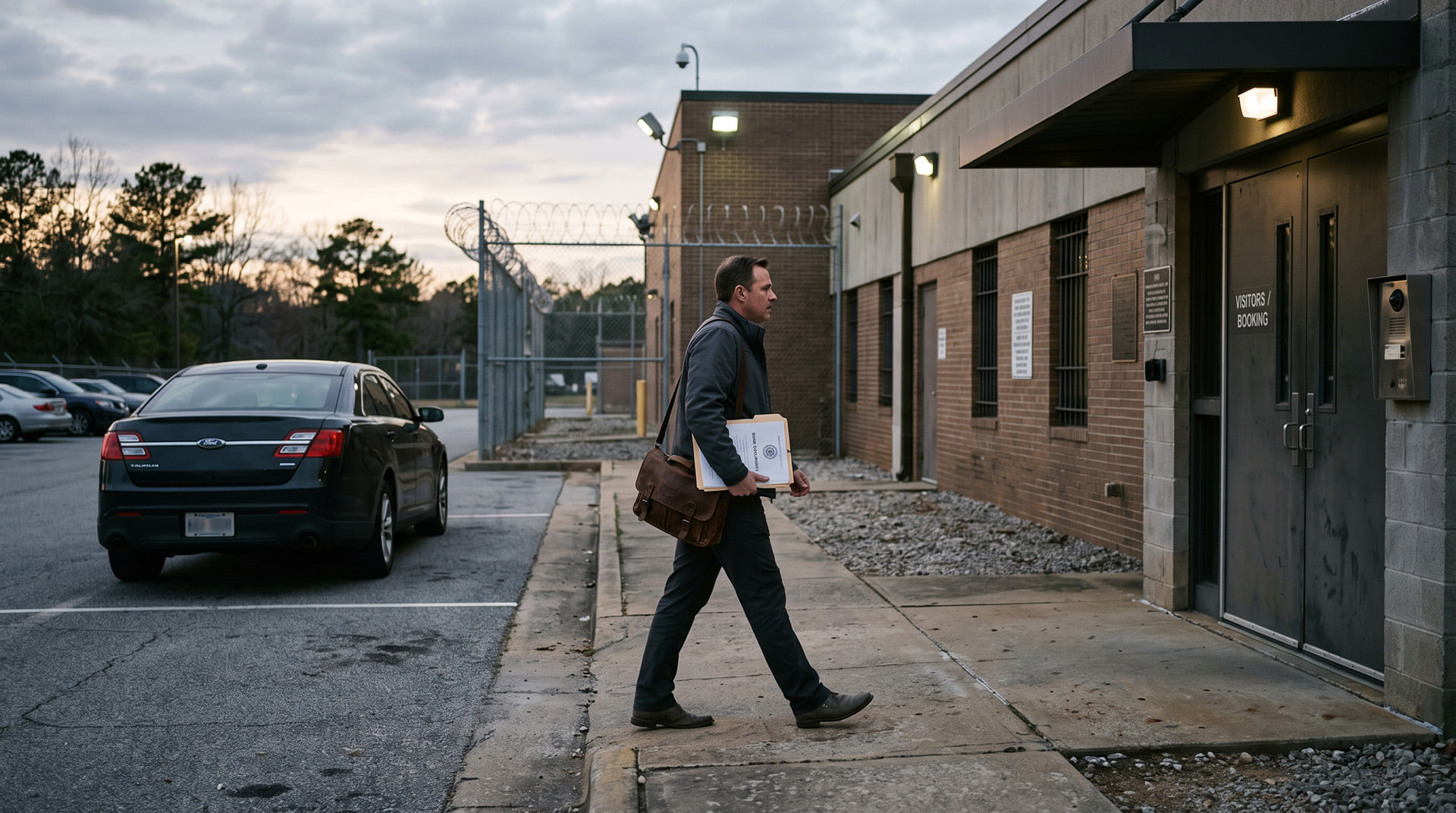
Once the paperwork is signed, the bond goes to the jail. We drive it over ourselves rather than sending it into a fax queue and hoping, which is one of the few places in this process where effort genuinely buys speed.
After that, release timing belongs to the jail. Staff verify the bond, close out the booking file, return the person's property, and walk them out. How long release actually takes depends on the shift and the queue that night, and it can be twenty minutes or it can be several hours.
One situation surprises families often enough to be worth naming. If federal immigration authorities have placed a detainer on your loved one, posting the county bond will not get them out. An immigration bond is a separate federal instrument, filed with ICE rather than with the county, and it works differently from start to finish. Ask us and we will tell you honestly what you are dealing with.
Conditions of Release You Need to Take Seriously
Release is rarely unconditional. A magistrate can attach requirements to a bond: no contact with an alleged victim, a protective order, GPS monitoring, an ignition interlock device after a DWI, travel limits, or regular check ins.
These conditions carry real weight, because violating one can put a person straight back in custody on a charge they had already bonded out of. Read every line of the release paperwork before you leave the building, and ask the court or an attorney about anything you do not understand.
What Comes After Release
Release ends the jail part of this. The court part is just beginning. Your loved one leaves with a first court setting, and that date is the whole reason bail exists. Every setting after it has to be met too, right through to the day the case is resolved.
Keep the paperwork somewhere you will not lose it, put every date in a phone calendar the moment you get it, and call the court or an attorney if a setting ever moves. Missing one turns a manageable situation into a much more expensive one for everybody who signed.

Common Questions About the Texas Arrest Process
There is no single answer, because the clock is really two clocks. Booking and magistration have to finish before bail is even set, and that stretch is entirely up to the jail's workload. Once a bond is posted, release processing can run twenty minutes or several hours depending on the shift. Call us and we can usually tell you which stage your loved one is in right now.
Bail does not keep business hours. A jail will take a bond whenever it is delivered, so the most useful thing you can do overnight is gather the name, the jail, and your own photo ID. Send those over and we will move on it at the first opportunity.
The standard premium is ten percent of the bail amount, and ten percent is the ceiling with us. You pay 3% down to get the release moving and the balance goes on a weekly plan with no interest, no application fee, and no credit check.
Never a credit check. Collateral is not always necessary either, since signature bonds are available for qualifying defendants. One cosigner is what we ask for, and we are flexible about who that person is.
Give us the name and the jail and we will pull the charge and the bail amount while you are still on the phone. Families call us not knowing any of it, and that is completely normal.
What Not to Do While You Wait
Do not call the jail every fifteen minutes, because it will not move your loved one up the queue and it ties up a line other families need. Do not discuss the case in detail on a recorded jail phone line. Do not go looking for a lower rate from an office that quotes you a number over the phone and then hands you a stack of fees at the counter.
Waiting is genuinely the hardest part of this, and there is not much to do with that time except get the paperwork ready so nothing stalls when the bail amount comes through.
Being a Cosigner: What You Are Signing Up For
The cosigner, or indemnitor, is the person who takes responsibility for making sure the defendant shows up to court. If they appear at every setting, the bond is discharged at the end of the case and the obligation ends.
If they miss a court date, the cosigner is on the hook for the full bail amount, and that is the part people skim past at the signing table. Ask us to explain it plainly before you sign, because a cosigner who understands the deal is a cosigner who makes the phone calls that keep everybody out of trouble.
If There Is Also a Warrant Somewhere Else
Every so often a person bonds out of one jail only to be picked up on an outstanding warrant from a neighboring city. Traffic warrants are the usual culprit, and they can be handled ahead of time so nobody gets a second unpleasant surprise.
If you suspect there is another warrant out there, say so when you call. Finding out now is far better than finding out in a parking lot.
Why Families Call Us Instead of Waiting It Out
Our office sits at 2605 Fort Worth Ave, a three minute drive from the Dallas County jail, and our bonds are underwritten by Lexington National Insurance. Osiris holds the license and is in the office working with families herself. Most of our staff is family.
We speak English and Spanish, we keep snacks and coffee out because nobody plans for a night like this, and we hold a top-tier rating across more than 230 Google reviews. One customer described being in and out of our office in twenty minutes, which is roughly the goal every time.
The rest of it is deliberately simple. One cosigner, not three or four. Three percent down instead of ten. Signature bonds for defendants who qualify, so collateral is not always part of the conversation. If we cannot post the bond, you get a full refund. Whichever jail your loved one is in, we can help.
We Have Probably Met Someone in Your Situation This Week
Plenty of the families who call us have been through this before, and some are calling us for the second or third time. Nobody here is going to make you feel bad about that. We believe in second chances, and we believe no one should spend more time in a jail cell than they have to.
Being arrested is a scary and embarrassing experience, for the person inside and for the family outside. Our job is to make the next few hours less frightening and provide dignity for all involved.
Get the Bail Process Started
If your loved one has been arrested, Penny Bail Bonds can help you find out where they are in the booking process, whether bond has been set, and what is required for release. We’ll provide the cost in writing before you pay and explain the fees and requirements clearly so you know exactly what to expect. Contact Penny Bail Bonds to get the information you need and start the process.
Call Penny Bail Bonds at 214-272-7470 and let us get your loved one back home.